Perimenopause weight gain: why it happens and what actually helps
Starting in perimenopause, women gain an average of one to two pounds a year, and roughly one in five gains ten pounds or more. What the averages never capture is the part that hurts most: the weight arrives in a new place, on a body you thought you knew, while you are doing everything you did before. Same meals. Same walks. Different reflection.
If you have been told to eat less and move more by someone who never ran a single lab on you, this post is the opposite of that. We are going to walk through why perimenopause weight gain happens and what actually helps: what is physically changing in your body, how much weight change is genuinely typical, how long the shift lasts, and which treatment options are worth your time and money.
In case you are new here, we are Herrera MD MedSpa, a physician-led med spa for women helping women navigate the midlife changes nobody prepared them for, with science, cultural understanding and honest guidance. Dr. Brenda Herrera is an internal medicine physician with nearly twenty years of experience, and this is the conversation she has more than any other.
What causes perimenopause weight gain?
Perimenopause is not a single switch flipping off. It is a hormonal renegotiation that can last four to ten years, and during it, estrogen and progesterone do not decline politely. They swing. Those swings change how your body handles fuel, and the effects stack.
The frustrating truth is that no single cause explains perimenopause weight gain. It is estrogen, plus muscle loss, plus insulin sensitivity, plus sleep, plus cortisol, all pulling in the same direction at the same stage of life. Which is exactly why single solutions rarely work.
Estrogen and fat storage: why the weight moves to your belly
Estrogen influences where your body decides to store fat. When levels were higher, storage favored hips and thighs. As estrogen falls, that preference shifts toward the abdomen, and specifically toward visceral fat, the kind that packs around your organs.
This is why so many women tell us the scale barely moved but nothing fits. The total may be similar. The distribution is not. Visceral fat also behaves differently from the fat you carried at thirty, because it is metabolically active and drives inflammation and insulin resistance, which makes the next few pounds easier to gain and harder to lose. That is the loop we are trying to interrupt.
Muscle loss and insulin resistance: the quieter drivers
From your mid thirties onward, you lose muscle mass steadily unless you actively train against it. Muscle is metabolically expensive tissue, so less of it means your body burns fewer calories at rest, doing nothing, forever. Add falling estrogen, which supports insulin sensitivity, and your body becomes less efficient at moving sugar out of the bloodstream and more willing to store it.
We see this pattern in labs constantly: fasting insulin creeping up, hemoglobin A1c drifting into the prediabetic range, triglycerides rising, all in a woman who was told her bloodwork was normal because nobody ordered the right tests. Once you can see it on paper, perimenopause weight gain stops feeling like a personal failure and starts looking like what it is, a treatable metabolic shift.
At what age does perimenopause weight gain start?
Most women notice it in their early to mid forties, although it can begin in the late thirties. The transition typically lasts four to ten years before your final period, which for most women arrives around 51 or 52.
Why the timing of perimenopause weight gain catches you off guard
You are not thinking about menopause yet. You are thinking about a promotion, a teenager who needs the car, a parent whose appointments now live in your calendar. Periods are still coming, maybe irregularly, so nobody connects the new belly, the disrupted sleep and the shorter fuse to the same hormonal source.
If you are 43 and confused about your body, you are not early and you are not imagining it. The women we see most often are exactly here: still menstruating, still being told everything looks normal, and quietly certain that something changed.
The symptoms that usually arrive alongside perimenopause weight gain
Perimenopause weight gain rarely shows up alone. When a patient describes the change in her body, we ask about the rest of the picture, because the cluster is what tells us where to look:
- Waking at three in the morning, often warm, often with your heart going
- Anxiety that feels chemical rather than situational, in a life that has not changed
- A shorter fuse with the people you love most
- Brain fog that costs you the word you were reaching for in a meeting
- Skin that looks duller and thinner, and hair that is not what it was
- Jaw tension and clenching at night, which many women only discover from a dentist
That last one surprises people. Stress and disturbed sleep in midlife drive nighttime clenching, and over time the jaw muscle thickens and the lower face squares off, which women often read as weight gain in the face. It is frequently muscle rather than fat, and it responds to something entirely different, as we explain in our post on masseter Botox for a softer jawline. Naming the right cause is half of getting the right treatment.
What is the average perimenopause weight gain?
Research puts the average around five to seven pounds across the transition, accumulating at roughly one and a half pounds a year. About twenty percent of women gain ten pounds or more. Some studies of the years immediately surrounding the final period show faster accumulation, closer to one to two pounds a month for a stretch.
We share these numbers for a specific reason. Women walk into our office convinced something is deeply wrong because they gained twelve pounds in two years. That is on the higher end of normal, not evidence of a broken body. Meanwhile a woman who gained four pounds but lost noticeable muscle and added inches at her waist may have a more concerning metabolic picture despite the smaller number. This is why we measure body composition instead of trusting a bathroom scale.
Perimenopause belly fat: why the shape changed even when the scale did not
Many of our patients have not gained meaningful weight at all. They have redistributed it. Waistbands tighten while the number holds steady, and that is one of the most under explained experiences of midlife.
What is happening is a trade. You are losing lean tissue and gaining visceral fat, roughly in balance on the scale, entirely out of balance in your clothes and in your bloodwork. The good news is that visceral fat responds well to the right interventions, often faster than subcutaneous fat does. The bad news is that the interventions that work are not the low calorie, high cardio approach most women reach for first, which tends to accelerate the muscle loss driving the problem.
Why the skin on your thighs and arms changed too
Estrogen supports collagen, and collagen is part of what keeps the connective tissue under your skin organized. As estrogen falls, dimpling on the thighs and hips can become more visible even when your weight has barely moved, and crepey texture appears on the upper arms.
This frustrates women who assume the answer is more cardio. It usually is not, because the issue is structural rather than a matter of volume, which is why we look at fat and texture as two separate problems that need to be addressed together. Our post on treating fat and cellulite as one coordinated plan explains why chasing one without the other tends to disappoint.

How long does perimenopause weight gain last?
The hormonally driven phase is most active in the two to three years before your final period and roughly one to two years after, then it generally levels off. Weight usually stabilizes about a year or two into postmenopause.
Two honest caveats. First, stabilizing is not the same as reversing, so weight gained during the transition tends to stay unless something changes. Second, the fat redistribution continues even after the scale settles, because aging and muscle loss keep working in the background.
Waiting it out is not a strategy. The years you spend waiting are the same years you could be building the muscle and metabolic health that carry you into your sixties and seventies. We would rather start with you at 44 than meet you at 56 with a decade of lost muscle to rebuild.
What actually helps perimenopause weight gain?
You change the inputs your body is now responding to, rather than repeating what worked at thirty. In practice, that means protecting muscle, feeding it properly, and taking sleep and stress as seriously as diet.
Strength and protein: the non-negotiables
Resistance training two to three times a week is the single highest value change against perimenopause weight gain that most women can make. Not because it burns calories in the moment, but because it defends the tissue that determines your metabolic rate for the rest of your life. Walking is wonderful for your heart and your head, and it will not preserve muscle on its own.
Protein is the other half of that equation. Most women we see are eating well under what they need, especially at breakfast. When protein comes up at every meal, cravings settle, blood sugar steadies, and the strength training actually produces muscle instead of just fatigue. A Mediterranean style pattern built around whole foods, fiber and healthy fats, with protein anchoring each meal, works better in midlife than any restrictive plan we have seen.
Sleep and cortisol: the part everyone skips
Perimenopause disrupts sleep through night sweats, anxiety and early waking. Short sleep raises cortisol, and elevated cortisol promotes abdominal fat storage and increases appetite the next day. You can eat perfectly and train consistently and still stall if you are sleeping five broken hours.
This is where being the strong one for everybody catches up with you. Many of our patients are running on caffeine and adrenaline by three in the afternoon, then wondering why their body is holding weight. Treating the sleep, whether through hormone support, stress management or a simple honest look at what you are protecting in your calendar, often unlocks progress that no amount of dieting could.
What perimenopause weight gain treatment options are there?
Beyond lifestyle, there are real medical options for perimenopause weight gain, and they work best when chosen after evaluating what your labs and symptoms actually show. This is the part of the conversation we take the most time with, because the right answer differs enormously from one woman to the next.
Hormone therapy: what it can and cannot do for weight
Hormone therapy is not a weight loss treatment, and we will never sell it to you as one. What it does well is treat the symptoms that make weight management nearly impossible: hot flashes, night sweats, disrupted sleep, mood volatility and low energy. Research also suggests it may influence where fat is stored, favoring less abdominal accumulation.
For the right woman, restoring hormonal stability is what makes everything else finally stick. She sleeps, so cortisol comes down. She has energy, so she trains. She feels like herself, so she keeps going. Our hormone therapy program for women starts with full lab work and a real discussion of your history and risks, because this decision deserves more than a fifteen minute appointment.
GLP-1 medications in perimenopause: when we consider them
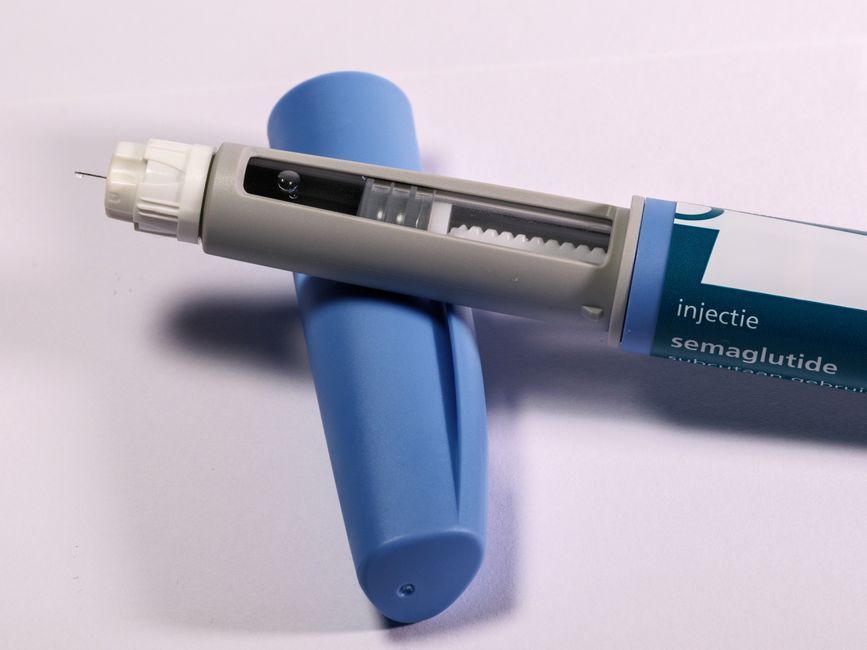
Medications such as semaglutide have changed what is possible for women whose insulin resistance and appetite signaling have shifted with their hormones. They reduce appetite, improve blood sugar handling, and often break a plateau that lifestyle changes alone could not.
We use them thoughtfully, as part of a plan rather than as the plan. Every patient in our medical weight loss program gets lab work, body composition analysis and a protein and strength strategy alongside any prescription, because losing weight while losing muscle would leave you worse off metabolically than when you started. And for some women the honest recommendation is hormone support first, medication later or never. We would rather be right than fast.
What we look at before treating perimenopause weight gain
A first visit with us is mostly information gathering, because the plan is only as good as the picture it is built on. We review:
- Full hormone panel, including thyroid, which is misread more often than any other lab in this age group
- Fasting insulin, A1c and a lipid panel, not just glucose
- Inflammatory markers and iron status, since fatigue has more than one cause
- Body composition, so we are tracking muscle and fat separately instead of one number
- Your actual week: sleep, training, meals, stress and what you are willing to change
Then we tell you what we see, in plain language, including the parts that are not treatable with anything we sell.
Are you ready to stop blaming yourself for perimenopause weight gain that was never your fault?
There is a particular loneliness in perimenopause weight gain. Your body changed, you did nothing wrong, and the people you asked for help either dismissed it or handed you a pamphlet. You have spent years pouring into your career, your children, your parents, and now the one body you have needs attention and you do not know where to start. That is not vanity. That is maintenance you have deferred for a decade.
At Herrera MD MedSpa, the answer to why perimenopause weight gain happens starts with information rather than assumptions. Full hormone and metabolic labs, body composition, a detailed history and a physician who has the time to explain what all of it means. From there we build a plan that may include hormone therapy, may include our medical weight loss program, and will always include a straight answer about what we expect it to do. We never upsell. Every recommendation has to earn its place.
Women come to us from across Oakland County, whether that is a short drive to our Rochester Hills med spa, the trip over from Bloomfield, or an appointment squeezed between errands for our patients in Birmingham. Wherever you are coming from, you will be met by someone who takes your symptoms seriously the first time you describe them.
You are not asking for too much. You are finally asking for you. Book your consultation today.
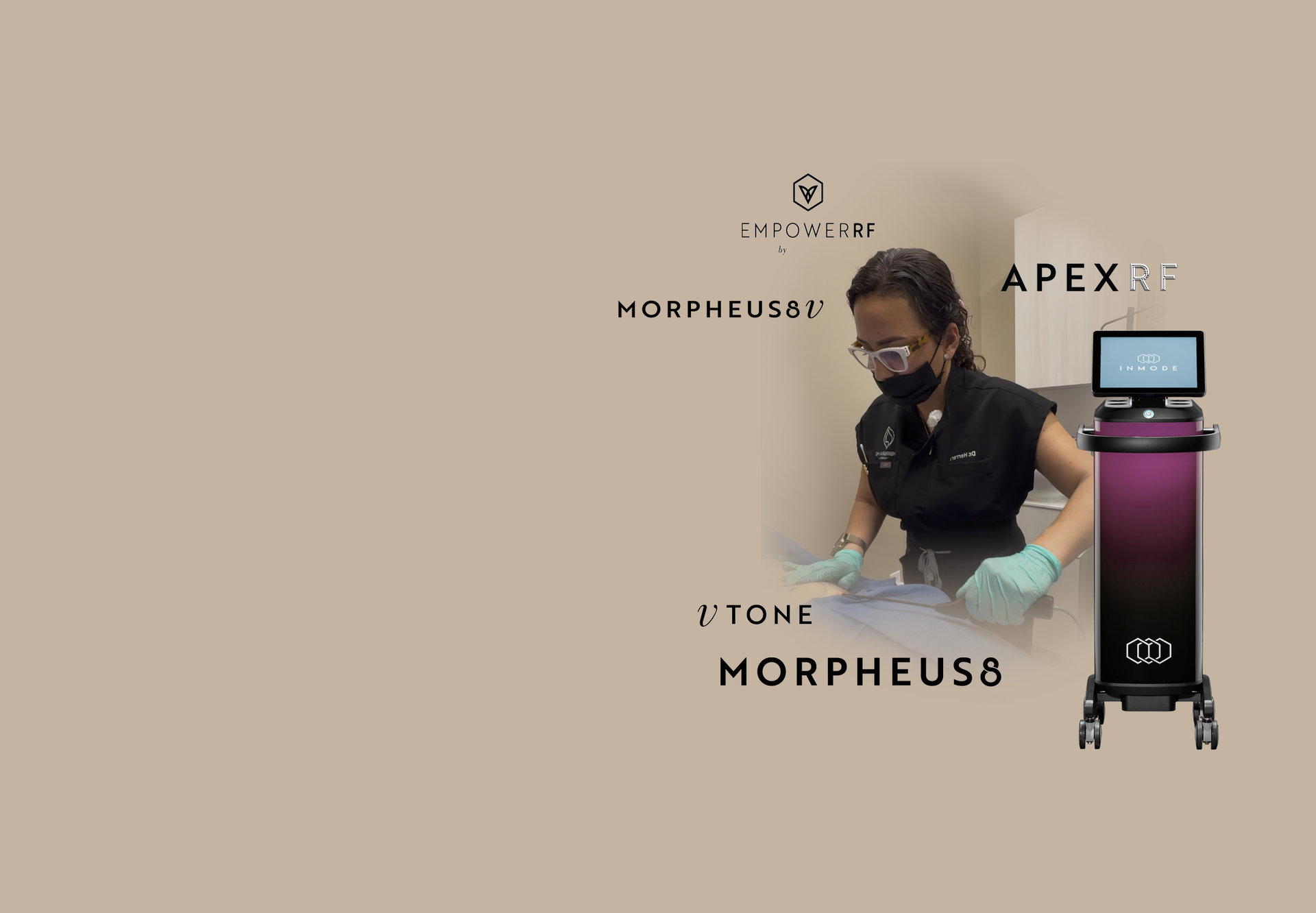
Hi, I’m Dr. Brenda Herrera
An internal medicine physician with nearly two decades of experience





Medical disclaimer. The content on this blog is provided for general informational and educational purposes only. It does not constitute medical advice, a medical opinion, a diagnosis, or a treatment recommendation, and it is not a substitute for care from your own physician or another qualified healthcare provider. Reading this blog or contacting us through this site does not create a physician-patient relationship. Always seek the advice of your physician with any questions you may have about a medical condition, and never disregard or delay seeking professional medical advice because of something you read here. If you think you may have a medical emergency, call 911 or go to the nearest emergency room immediately.