
GLP-1 side effects: what to expect and how to manage them
Most people who stop a GLP-1 in the first two months do not stop because it failed. They stop because week five felt awful and nobody had told them that week five often does. That is a preventable ending, and it is the reason we spend so much of a first visit on what the next four months will actually feel like.
You have probably read the symptom lists already. What those lists rarely tell you is which effects mean your dose climbed too fast, which ones fade on their own, which ones women notice more than men, and what genuinely happens to your body when you stop. This post covers what to expect from GLP-1 side effects and how to manage them, the way we would explain it sitting across from you.
In case you are new here, we are Herrera MD MedSpa, a physician-led med spa for women helping women treat the metabolic and hormonal reasons weight stopped responding, with real oversight rather than a monthly shipment. Dr. Brenda Herrera is an internal medicine physician with nearly two decades of experience, which means managing GLP-1 side effects here is a clinical conversation, not a customer service ticket.
What are the most common GLP-1 side effects?
Almost all GLP-1 side effects are digestive, and they trace directly back to how the medication works. GLP-1 medications slow how quickly food leaves your stomach, so your stomach is doing everything more slowly than it used to. Nausea, fullness that arrives after three bites, constipation, diarrhea, reflux and burping all come from that single change.
Outside the gut, fatigue, headache and lightheadedness are common in the first weeks, and most of the time they are dehydration rather than the drug. When your appetite drops, your fluid intake usually drops with it, and women who were already running on coffee feel that fast.
How long do GLP-1 side effects last?
For most people, the difficult stretch is the four to seven days after each dose increase, and then it settles. That rhythm is predictable enough that we tell patients to plan around it: do not schedule your dose increase the week of a family trip or a work event you care about.
GLP-1 side effects that do not settle are telling you something. Nausea that persists for weeks usually means the dose climbed faster than your body could adapt, which is a solvable problem, not a reason to quit. We slow the schedule, hold you at a comfortable dose for longer, and let your system catch up. A woman doing beautifully at 1 mg has no medical need to reach 2.4 mg simply because a chart says so.
What we wish more patients knew about GLP-1 side effects before starting
Three things, and they change how the first months go:
- Protein first, every meal. With a suppressed appetite it is easy to eat six hundred calories a day and lose muscle along with fat, which leaves you metabolically worse off than when you started.
- Water beyond what feels necessary. Most of the fatigue and headache we hear about in month one improves with hydration alone.
- Big, rich, greasy meals will make you miserable. Your stomach is emptying slowly, and it cannot process the meal it used to handle at nine at night.
None of that is restriction for its own sake. It is the difference between GLP-1 side effects you manage and GLP-1 side effects that end your treatment.
Who is most likely to get serious GLP-1 side effects?
Anyone with a personal or family history of medullary thyroid carcinoma or MEN 2 should not take this class of medication. A history of pancreatitis is a serious caution. Active gallbladder disease, significant kidney impairment and certain gastrointestinal motility disorders all require careful review before anyone prescribes.
Pregnancy rules it out, and this matters more than most women expect. If you are trying to conceive, or could become pregnant, that belongs in the conversation before the first injection, not after. Improved insulin sensitivity can make ovulation more regular in women who assumed they could not conceive easily, and we have seen that surprise people.
There is also a group where the answer is not medical but practical. If nobody is monitoring you, if you cannot commit to protein and strength training, or if your relationship with food is such that appetite suppression would become something harmful, then this is not the right tool for you right now. We would rather say that clearly than take your money.
What are the long term GLP-1 side effects?
These medications have been used for well over a decade in diabetes care, which is a longer record than most people realize. The known long term concerns are gallbladder disease, a small increase in pancreatitis risk, and the thyroid tumor signal seen in rodent studies that has never been established in humans but keeps its warning for good reason.
The long term GLP-1 side effect we watch most closely is one nobody mentions in an ad: muscle loss. Rapid weight loss without adequate protein and resistance training takes lean tissue with it, and lean tissue is what determines your metabolic rate for the rest of your life. Losing twenty pounds with five of it from muscle is a very different outcome than losing twenty pounds of fat, and only one of them makes the next decade easier.
What organ do GLP-1 side effects affect most?
There is no single organ this medication damages, which is the honest answer to a question that circulates constantly online. The pancreas and gallbladder get named most often, because pancreatitis and gallstones are real if uncommon risks, and rapid weight loss of any kind raises gallstone risk on its own.
The kidneys deserve a practical mention. They are rarely affected by the drug directly, but they are affected by dehydration, and dehydration is common when someone is nauseated, eating little and drinking less. That is exactly why we ask about your water intake at every visit instead of only asking about the scale.
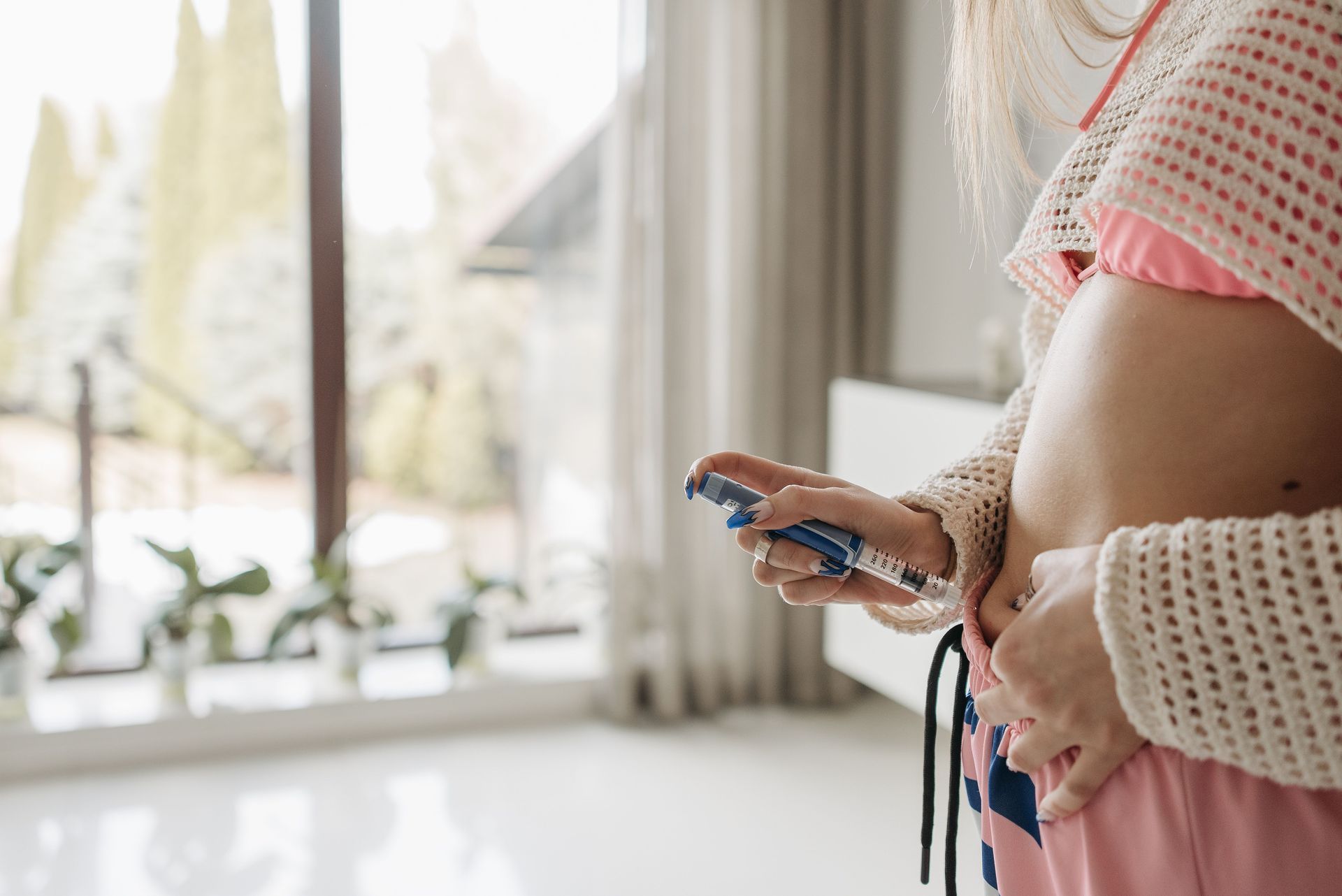
Which GLP-1 side effects do women notice most?
The published GLP-1 side effects lists are written for everyone. The concerns women actually bring to us are more specific, and they are rarely addressed anywhere else.
Hair thinning is at the top. It usually begins two to four months in and is tied to how quickly the weight came off rather than to the medication itself, the same shedding that follows any significant physical stress. It is temporary, it improves with adequate protein and iron, and it is far less common when weight comes off at a reasonable pace.
Facial changes are next. Fat leaves the face early, and cheeks flatten while lines that were already forming become more visible. That is volume loss, not aging accelerated by a drug, and knowing the difference lets you decide calmly whether you want to address it. For most women the lines that bother them first are the ones at the outer corners of the eyes, and our post on crow’s feet and how Botox softens them explains what that treatment actually does.
Loose skin and body texture come up around month five or six. As the fat layer thins, dimpling on the thighs and hips can look more obvious rather than less, because that texture lives in the connective tissue rather than in the fat, which is why we look at fat and cellulite as one coordinated problem instead of chasing them separately.
Then there is the hormonal overlap. Fatigue, mood shifts and irregular cycles are frequently attributed to GLP-1 side effects when the real driver is perimenopause running in the background. We see this constantly, which is why our metabolic and hormone health evaluation runs alongside weight care rather than separately, and why hormone therapy is sometimes the piece that makes the rest tolerable. Treating one system while ignoring the other leaves half of your symptoms unexplained.
Is weight regain after stopping a GLP-1 a side effect or something else?
It is real, whatever you call it, and any clinic that tells you otherwise is not being straight with you. These medications treat a chronic condition. When you stop, the hormonal signal they were replacing returns to where it was, appetite comes back, and regain follows for most people who stop with nothing else in place.
What changes the outcome is what you built while the appetite noise was quiet. The women who hold their results are the ones who used that window for real strength training, consistent protein, protected sleep and hormones that were evaluated instead of ignored. We spend as much time on that scaffolding as on the prescription, because that is the part that still belongs to you after the medication stops.
Do you have to stay on a GLP-1 forever to avoid that?
Not necessarily, and the decision should be yours with full information rather than a policy handed to you. Some women stay on a low maintenance dose long term, the way they would stay on a blood pressure medication. Others taper off after reaching their goal and hold their weight with lifestyle and hormone support. Some pause, regain a little, and come back.
When a patient in our medical weight loss program wants to come off, we plan it rather than stop it. We taper gradually, tighten up protein and training first, recheck labs, and watch what happens over the following months. Stopping abruptly with no plan is how people end up back where they started and blaming themselves for it.
How do you manage GLP-1 side effects at home, and when should you call us?
Most GLP-1 side effects are uncomfortable rather than dangerous, and most are managed with the protein, water and meal size adjustments above. A few are not, and you should not spend a weekend wondering:
- Severe abdominal pain, especially pain that radiates into your back, with or without vomiting
- Vomiting that keeps you from holding down fluids for more than a day
- Signs of dehydration such as dizziness on standing, very little urine or a racing heart
- Pain in the upper right abdomen after eating, which can point to the gallbladder
- Any swelling of the face or throat, or trouble breathing
And there is one more reason to call that has nothing to do with an emergency: when the plan is not working for your life. A dose you dread, a schedule you cannot sustain, a week where you have eaten almost nothing. Those are things we can adjust, and we would much rather hear about them in real time than read about them in a message telling us you quit.
What would it feel like to have someone managing GLP-1 side effects with you?
There is a particular loneliness in managing GLP-1 side effects alone, from a website. A vial arrives, an instruction sheet arrives, and everything after that is you guessing in your kitchen at ten at night about whether what you are feeling is normal. You deserved more support than that, and wanting it does not make you difficult.
At Herrera MD MedSpa, managing GLP-1 side effects is part of the treatment rather than an afterthought. Care starts with a full assessment and lab work rather than a questionnaire, and it continues with someone watching. Every patient in our medical weight loss program gets body composition tracking, protein and strength guidance, dose adjustments based on how you are actually feeling, and a physician who will tell you honestly when a medication is not the right tool for you.
Women travel to us from across Oakland County and Macomb County, some minutes away from our Rochester Hills med spa and others coming down from Sterling Heights after work. Wherever you are starting from, you will not be managing this alone.
You have taken care of everyone else through harder things than this. Let someone take care of you. Book your consultation today.

Hi, I’m Dr. Brenda Herrera
An internal medicine physician with nearly two decades of experience






Medical disclaimer. The content on this blog is provided for general informational and educational purposes only. It does not constitute medical advice, a medical opinion, a diagnosis, or a treatment recommendation, and it is not a substitute for care from your own physician or another qualified healthcare provider. Reading this blog or contacting us through this site does not create a physician-patient relationship. Always seek the advice of your physician with any questions you may have about a medical condition, and never disregard or delay seeking professional medical advice because of something you read here. If you think you may have a medical emergency, call 911 or go to the nearest emergency room immediately.