
Body contouring: your guide to choosing the right treatment
"Body contouring" gets used as a catch-all term for dozens of very different treatments, which makes it one of the most confusing categories to research on your own. Two patients can both say they want body contouring and mean entirely different things: one is dealing with loose skin after weight loss, another wants to smooth cellulite on her thighs, and a third is trying to shrink a stubborn pocket of fat that has never responded to exercise. Each of those goals points toward a different treatment path, and starting with the technology instead of your actual concern is how people end up disappointed.
This post is built as a decision guide: how to identify your primary concern, which category of treatment tends to match it, what drives the cost of body contouring, and how to evaluate whether a provider is being straight with you.
In case you are new here, I am Brenda Herrera, founder of Herrera MD MedSpa, a physician-led medical spa helping women reconnect with their confidence through ethical, medically guided aesthetic care. Nearly every consultation we do starts with untangling what a patient wants to change, since the right treatment plan depends entirely on getting that part right first.
Start with your concern, not the technology
Before you research a single device or procedure, get specific about what is bothering you. Vague goals like "I want to look better" lead to vague, unsatisfying treatment plans. Specific goals lead to a specific, matched plan.
If your main concern is stubborn fat
Stubborn fat refers to localized pockets that do not respond to diet or exercise, commonly on the abdomen, flanks, thighs, or upper arms. If this is your primary concern and you are otherwise close to your goal weight, fat-focused technologies like cryolipolysis or laser-based fat reduction are usually the first thing worth discussing.
If your main concern is loose or crepey skin
Skin laxity is a different problem entirely from fat, and no fat-reduction technology will resolve it. If your skin feels thin, crepey, or noticeably less firm than it used to, especially after pregnancy, significant weight loss, or age-related collagen decline, skin tightening approaches using radiofrequency or, for more significant laxity, a surgical skin removal procedure are the more relevant paths.
If your main concern is cellulite
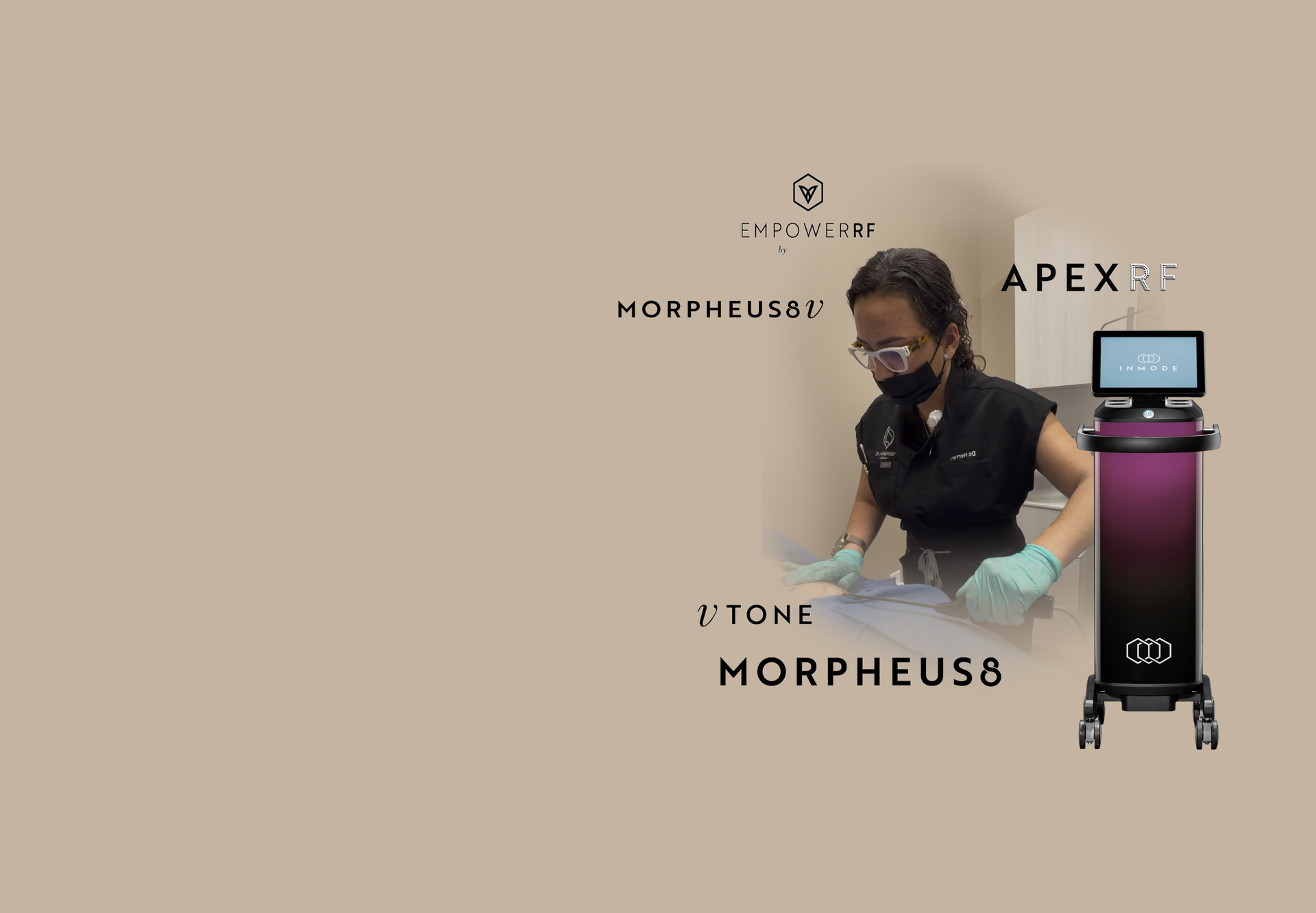
Cellulite is a structural issue involving the fibrous bands beneath your skin, and it can appear regardless of your weight or fitness level. If dimpling is your primary frustration, treatments purpose-built for cellulite, or combination devices that address it alongside fat and skin quality, are the better starting point than a general fat-reduction device.
If you have a combination of concerns
Most patients we see do not have a single, isolated concern. A patient might have some stubborn fat on the abdomen, mild skin laxity from a past pregnancy, and cellulite on the thighs, all at once. In this situation, a combination approach, or a plan that sequences multiple treatments together, generally produces a more complete result than picking one concern to treat while ignoring the others.
Matching your concern to a treatment category
| Your primary concern | Treatment category most likely to help |
|---|---|
| Stubborn, localized fat | Cryolipolysis, laser fat reduction, or surgical liposuction for larger volume |
| Loose or crepey skin | Radiofrequency skin tightening for mild laxity, surgical skin removal for significant laxity |
| Cellulite and dimpling | Acoustic wave therapy, subcision, or combination devices |
| A mix of fat, skin, and cellulite in one area | A combination device or a sequenced, multi-treatment plan |
This table is a starting point, not a diagnosis. The right recommendation still depends on your specific presentation, which is why a proper consultation matters more than matching yourself to a chart alone.
What drives the cost of body contouring
Cost varies enormously across this category, and understanding what drives that variation helps you evaluate whether a quoted price makes sense for your situation.
Surgical procedures
Surgical body contouring costs reflect operating room fees, anesthesia, surgeon expertise, and the complexity of the procedure itself. These are generally one-time costs, though revision procedures are sometimes needed years later.
Non-surgical treatment series
Non-surgical treatments are typically priced per session or per package of sessions, since most require a series rather than a single visit. The total cost depends on how many areas you are treating, how many sessions your specific concern requires, and how much ongoing maintenance you choose to pursue afterward. A single low session price can be misleading if it does not reflect how many sessions you will need to see a meaningful result.
Questions worth asking about pricing
- How many total sessions does a patient with my specific concern typically need?
- Is the quoted price per session, per area, or for a full package?
- What does a realistic maintenance schedule cost per year?
- Are there financing options, and what are the actual terms?

How to evaluate a body contouring provider
The provider you choose matters as much as the technology itself, since the same device can produce very different results depending on who is operating it and how they are assessing candidacy.
Signs of a trustworthy provider
- They ask detailed questions about your goals and medical history before recommending a specific treatment
- They are willing to tell you if a treatment is not the right fit for your concern, even if it means turning away business
- They can clearly explain how a recommended technology works and why it fits your specific case
- They set realistic expectations about timeline and results rather than promising dramatic, immediate change
Red flags worth taking seriously
Be cautious of providers who recommend the same treatment to every patient regardless of their concern, who pressure you to commit to a large package before a proper consultation, or who cannot clearly answer questions about their own experience with a specific device or technique. It is also worth being wary of any practice where the person performing your consultation has no medical background at all, since evaluating candidacy properly, especially for combination or higher intensity treatments, benefits from clinical training that goes beyond a brief certification course on a single device.
Why physician oversight matters even for non-surgical treatments
Non-surgical does not mean risk-free, and even treatments with an excellent safety record can produce disappointing or occasionally problematic results in the wrong hands or with the wrong candidate. A physician-led practice brings a broader base of medical training to bear on decisions like whether a treatment is appropriate given your health history, how to adjust a plan if you are not responding as expected, and how to manage the rare complication if one arises.
Frequently asked questions about body contouring
Is body contouring the same as weight loss?
No. Body contouring reshapes and refines areas of the body but is not designed to produce significant weight loss. Patients seeking meaningful weight loss should look into medical weight loss support first, then consider body contouring for refinement afterward.
How soon will I see results?
This depends heavily on the category. Surgical results are visible relatively quickly, though final results take weeks to fully settle as swelling resolves. Non-surgical results build gradually over a series of sessions and weeks of biological processing afterward.
Do results last forever?
Fat cells removed through most technologies do not return, but remaining fat cells can still grow with weight gain, and the natural aging process continues to affect skin quality regardless of any past treatment. Maintenance is part of any long-term plan.
Can I combine surgical and non-surgical treatments?
Yes, and many patients do. It is common to pair surgical fat or skin removal with non-surgical skin tightening or cellulite treatment afterward, or to use non-surgical options first and consider surgery later if skin laxity becomes more significant over time. There is no rule that requires you to pick one category and stay there permanently.
What if I am not sure which category fits my concern?
This is exactly what a proper consultation is for. Bring photos if it helps you articulate what bothers you, be specific about what you have already tried, and expect your provider to ask enough questions to genuinely understand your goals before recommending anything.
You deserve a plan matched to your actual concern
You do not need to become an expert in every technology before reaching out. Part of our job is helping you translate what is bothering you into a treatment plan that addresses it, honestly and without unnecessary upsells.
Every body contouring consultation starts with understanding your specific concern before recommending any treatment. We proudly serve patients from our Med Spa in Rochester Hills, MI location. Book your consultation today.
Hi, I’m Dr. Brenda Herrera
An internal medicine physician with nearly two decades of experience







Medical disclaimer. The content on this blog is provided for general informational and educational purposes only. It does not constitute medical advice, a medical opinion, a diagnosis, or a treatment recommendation, and it is not a substitute for care from your own physician or another qualified healthcare provider. Reading this blog or contacting us through this site does not create a physician-patient relationship. Always seek the advice of your physician with any questions you may have about a medical condition, and never disregard or delay seeking professional medical advice because of something you read here. If you think you may have a medical emergency, call 911 or go to the nearest emergency room immediately.